
The Future of Work: AI and Humans Together
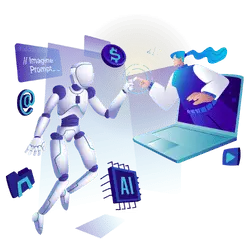
When people talk about the future of work, there’s often a lot of talk about robots taking over jobs or machines making humans obsolete. But what if the real future is one where humans and AI work side by side, each enhancing the other’s strengths? Imagine a workplace where technology handles the repetitive tasks, while humans focus on creativity, problem-solving, and emotional intelligence. It sounds like a dream, right? But it’s quickly becoming reality. In this article, we’ll explore how AI is not replacing workers, but rather, empowering them to do their best work.
1. AI in the Workplace: A Tool, Not a Threat
For years, we’ve heard about the rise of robots and AI systems that could eventually steal our jobs. The reality? AI is more of a tool than a replacement. Take, for example, customer service. Chatbots powered by AI are now commonly used to answer common questions, troubleshoot issues, and assist customers 24/7. But do these chatbots replace human customer service agents? Not at all. Instead, they take on the routine tasks, allowing human agents to focus on complex issues and provide more personalized support. AI is freeing up time, not eliminating jobs.
Imagine a world where you don’t have to spend your workday answering endless emails or organizing data. AI could automate these tasks, letting you focus on creative and strategic work. For instance, a marketing team could use AI tools to analyze data and predict trends, while the humans on the team focus on designing campaigns that speak to the hearts of their audience. Humans bring the intuition, empathy, and storytelling skills that AI simply can’t replicate.
2. The Human Touch: Where AI Falls Short
Despite its capabilities, AI is still far from being able to fully replace human workers. AI lacks the ability to understand complex human emotions, navigate the intricacies of human relationships, and adapt to unpredictable situations. Think about healthcare. While AI can help doctors diagnose diseases or suggest treatments based on medical data, it can’t replace the compassionate care that a human nurse or doctor provides. A machine doesn’t know how to hold your hand when you’re scared or offer a comforting word when you’re feeling anxious. These are the things humans excel at.
In creative fields like art, music, or writing, AI can assist, but it’s still not quite there when it comes to true innovation. Yes, AI can generate music or create a painting, but those works often lack the soul and personal connection that an artist brings to the table. That’s why collaboration between humans and AI is the key to unlocking the true potential of both.
3. Collaboration Between Humans and AI: A Perfect Partnership
The real magic happens when AI and humans collaborate. Take, for example, the field of design. AI tools can now assist designers in creating prototypes, suggesting color schemes, or even generating multiple design options in seconds. But it’s the human designer who decides which design speaks to the target audience, understands cultural nuances, and adds that final touch of creativity. In this case, AI is a partner, not a competitor.
Similarly, AI can assist in data analysis. But a human is still needed to interpret the findings, ask the right questions, and make decisions based on intuition and experience. In the finance industry, AI can analyze large amounts of financial data in a fraction of the time it would take a human. But when it comes to making big-picture decisions about investments or predicting market trends, human judgment is crucial.
The key to success is integration, not replacement. Rather than fearing that AI will take over, businesses and workers alike should embrace AI as a powerful assistant that enhances their capabilities. The future of work isn’t humans vs. AI – it’s humans with AI.
4. Skills of the Future: Adaptation is Key
As AI becomes more integrated into the workplace, it’s clear that the skills we need to succeed are changing. Soft skills like empathy, creativity, and communication will become even more important, as AI is unlikely to replicate these abilities anytime soon. Meanwhile, technical skills related to working with AI, such as data analysis and programming, will also be in high demand.
In the future, workers will need to be adaptable and willing to learn new skills. This might mean taking a course on AI programming or learning how to work with AI tools to improve your productivity. But it doesn’t mean abandoning everything we know about human-centered work. Instead, it’s about expanding our skill sets to make the most of the tools AI provides.
5. AI and Human Collaboration in Different Industries
Let’s look at how this collaboration is already unfolding in different industries:
- Healthcare: AI assists doctors in diagnosing diseases by analyzing medical images or patient records. But doctors still rely on their training, experience, and empathy to make treatment decisions and communicate with patients.
- Education: AI can personalize learning experiences by adapting to a student’s pace and learning style. However, teachers are still needed to motivate students, answer questions, and offer real-world insights.
- Retail: AI helps retailers with inventory management, supply chain optimization, and customer recommendations. But human workers still play a crucial role in customer interactions, ensuring a personalized shopping experience.
- Marketing: AI tools can analyze consumer behavior and predict trends, but human marketers are needed to craft stories that resonate with the audience, build brand loyalty, and create emotional connections.
In all of these fields, AI is not replacing humans; it’s making them more efficient, freeing them up to focus on the work that requires emotional intelligence, creativity, and strategic thinking.
Conclusion: Embrace the Future Together
The future of work is not about machines replacing humans – it’s about humans and AI working together to achieve more than ever before. AI can handle the repetitive tasks, while humans bring creativity, intuition, and empathy to the table. The key is embracing this collaboration and learning how to use AI as a tool that amplifies our strengths.
As we look to the future, it’s important for workers to continue developing both technical and soft skills, as these will be essential for thriving in an AI-powered workplace. The future is full of opportunities for those who are willing to adapt, learn, and embrace change. Together, humans and AI can create a workplace that is more innovative, efficient, and human-centered than ever before.
Actionable Takeaway: Start by exploring the AI tools available in your industry. Learn how they can improve your workflow, and think about how you can use your unique human abilities to complement the power of AI. The future is here – and it’s better when we work together.